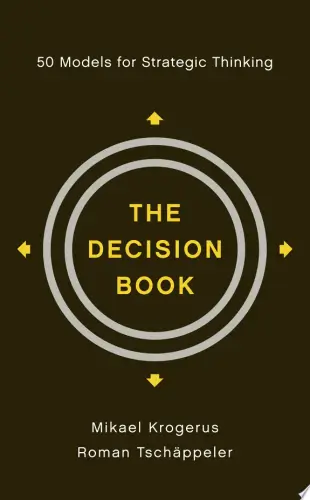
The Decision Book: 50 Models for Strategic Thinking
What's it about?
The Decision Book: 50 Models for Strategic Thinking offers you practical frameworks to enhance your decision-making skills. Each model simplifies complex situations, enabling you to analyze problems effectively. You'll learn to prioritize tasks, evaluate risks, and understand group dynamics. The book encourages you to reflect on your choices with tools like the Eisenhower Matrix and the SWOT analysis. By applying these models, you can develop clearer strategies and make more informed decisions in both personal and professional contexts.
About the Author
Mikael Krogerus is a Swiss-Finnish author known for co-authoring "The Decision Book" and "The Communication Book." His work often distills complex ideas into accessible formats, using concise, practical insights. Krogerus focuses on decision-making, communication, and personal development, offering readers clear frameworks for understanding and applying these concepts.
5 Key Ideas of The Decision Book: 50 Models for Strategic Thinking
Harnessing the Power of the Eisenhower Matrix
Prioritize your tasks by distinguishing between what's urgent and what's truly important to reclaim control over your time.
Think of your to-do list as a garden. If left unattended, weeds (urgent but unimportant tasks) can quickly overtake the flowers (important tasks), leaving your garden overgrown and chaotic.
- Clarifies priorities: Categorizing tasks helps you focus on long-term goals rather than immediate distractions.
- Reduces stress: Knowing what truly matters reduces overwhelm and helps you achieve balance.
- Improves efficiency: Directing energy toward significant tasks enhances productivity and satisfaction.
Create a four-quadrant chart and sort your current tasks to identify what requires immediate attention versus long-term focus.
Avoid mislabeling tasks based on external pressure; focus on your genuine long-term objectives instead.
Applying the Circle of Influence and Concern
Concentrate on factors within your control, and let go of those beyond your influence to reduce stress and increase personal effectiveness.
Think of yourself as a sailor; you can't control the wind, but you can adjust your sails to navigate your course.
- Enhances focus: Channeling energy towards controllable elements maximizes impact.
- Boosts emotional well-being: Letting go of uncontrollable concerns alleviates stress and anxiety.
- Cultivates proactive behavior: Focusing on influence empowers you to take decisive action.
List your current worries and separate them into concerns you can control versus those you cannot, then redirect your efforts accordingly.
Don't waste energy dwelling on unpredictable outcomes; instead, plan how to influence what you can.
Embracing Occam's Razor for Problem-Solving
Simpleness is often the key to clarity; when confronted with complexity, the simplest solution is usually the best.
Life is like a maze, and sometimes we overthink paths that are simpler than they appear. Choose the well-trodden path first before exploring the convoluted routes.
- Avoids overcomplication: Simplifying approach minimizes errors often found in complex schemes.
- Speeds up decision-making: Clear, straightforward options allow for quicker resolutions.
- Heightens clarity: Stripping down focus ensures understanding and implementation of solutions.
Review a current problem and apply a straightforward solution, eliminating unnecessary complexity.
Be cautious not to oversimplify; sometimes a quick fix inappropriately skips necessary details.
Deeper knowledge. Personal growth. Unlocked.
Unlock this book's key ideas and 15M+ more. Learn with quick, impactful summaries.
Read Full SummarySign up and read for free!
The Decision Book: 50 Models for Strategic Thinking Summary: Common Questions
 By Farid Asadi
"In decision-making, you must weigh the benefits against the costs, not just the profits against the losses." This quote from The Decision Book encapsulates the essence of the book beautifully. The author, Mikael Krogerus, presents 50 models that serve as tools to improve our strategic thinking and decision-making processes, which I found incredibly enlightening.
What had me hooked were the simple yet profound frameworks—like the Pareto Principle, which suggests that 80% of results come from 20% of the efforts. This model, among others, opened my eyes to optimizing daily choices in my personal and professional life. However, I did find myself scratching my head at some of the more intricate models, like the Bayes' Theorem, which, while fascinating, required a bit more cognitive effort to fully grasp its implications for decision-making.
Overall, my impression of The Decision Book is positive; it’s a thoughtful blend of theory and practical application. I would recommend it to anyone interested in improving their mindset towards strategic decisions, especially if they appreciate books like Thinking, Fast and Slow by Daniel Kahneman or The Art of Thinking Clearly by Rolf Dobelli. If you’re ready to elevate your decision-making skills, this book is definitely worth a read!
 By Mohammad Yekta
Experience Personalized Book Summaries, Today!
Discover a new way to gain knowledge, and save time.
Sign up for our 7-day trial now.
No Credit Card Needed
Similar Books

Emotional Intelligence at Work
Dalip Singh
Leadership Is Concept Heavy
Dr. Enoch Antwi
Seeing the Big Picture
Kevin Cope
Great by Choice
Jim Collins
The Leader′s Guide to Coaching in Schools
John Campbell
Preparing School Leaders for the 21st Century
Stephan Gerhard Huber
The E-Myth Manager
Michael E. Gerber
Leadership Is Language
L. David Marquet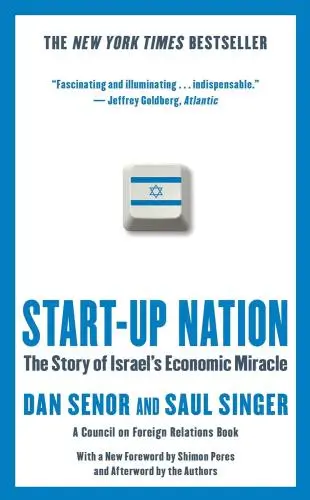
Start-up Nation
Dan Senor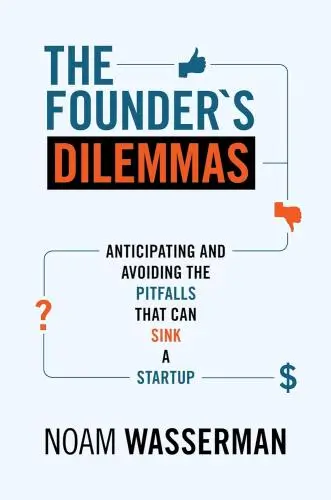
The Founder's Dilemmas
Noam WassermanTrending Summaries
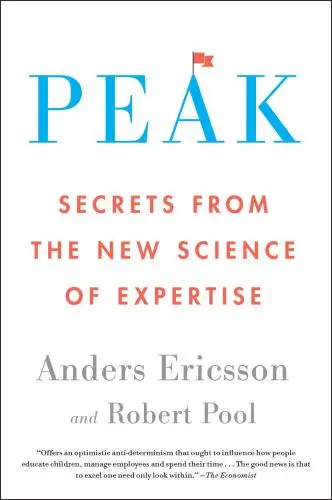
Peak
Anders Ericsson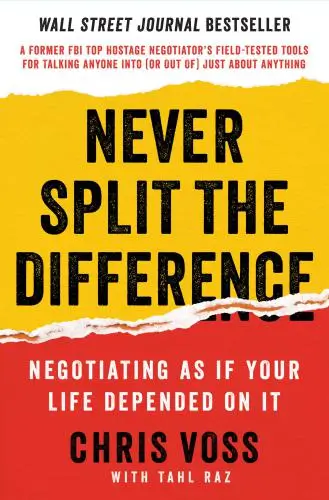
Never Split the Difference
Chris Voss
Smart Brevity
Jim VandeHei
The Psychology of Money
Morgan Housel
The First 90 Days
Michael D. Watkins
Atomic Habits
James Clear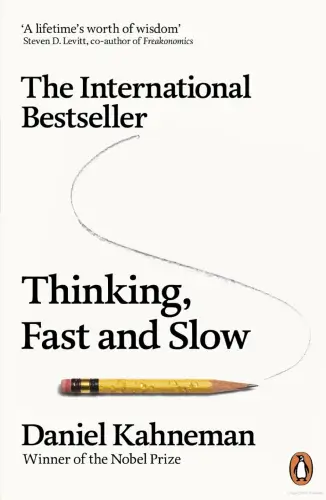
Thinking, Fast and Slow
Daniel Kahneman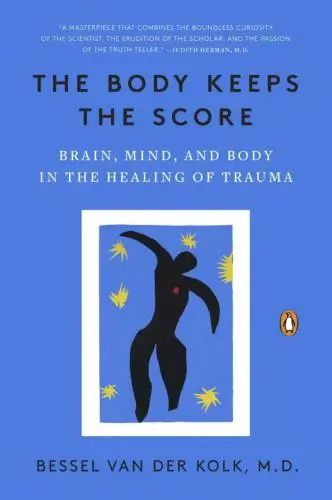
The Body Keeps the Score
Bessel van der Kolk M.D.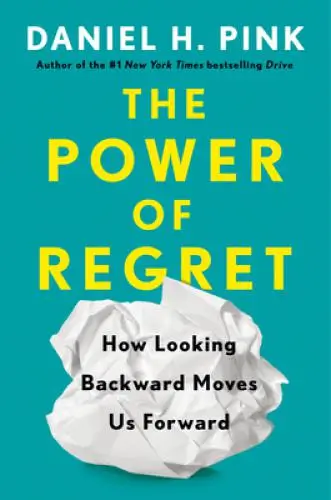
The Power of Regret
Daniel H. Pink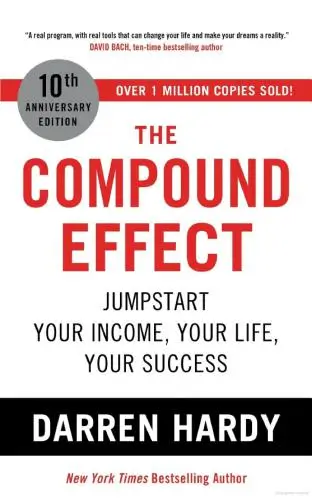
The Compound Effect
Darren HardyNew Books
The Daily Stoic 10th Anniversary Edition
Ryan Holiday
How To Talk So Little Kids Will Listen
Joanna Faber
Serpent Rising
Neven Paar
Super Mario Encyclopedia: The Official Guide to the First 30 Years
Nintendo
Make Yourself Unforgettable
Dale Carnegie Training
SCRATCH YOUR OWN ITCH: Turning Personal Needs into Purposeful Action
DR. NEERAJ TIWARI
Batman: The World
Various
Autobiography of a Yogi
Sri Sri Paramahansa Yogananda
Life in the White House
Robert P. Watson

 Sign up with Google